Welcome to our Ancona Duck Page! Here you can read about this amazing and versatile breed of ducks that brings us so much pride and joy! You can order eggs for hatching, eating, ducklings, pairings, and adults. When ordering hatching eggs, please be aware that the price is per egg! Ducklings are $15 and straight run. Special order of blue eggs and offspring from blue eggs is also available ! Enjoy !
You are pre-ordering growout pairings (two females; one male and one female) and /or adult ducks of 6 months or older. Minimum purchase of two. Pictures are for reference only. They are our own pictures of our own ducks, but they are not the actual ducks you will pick up. If you have a special reuqest for color you may have to wait until we have the color you want. To place an order, select the age and gender you want. Any order that does not meet the minimum of two ducks will be cancelled. Ducks are social ducks. It does not matter if you already has a duck, or two, or more. Ducks leave my farm in pairs or more.
What do we hail as GROWOUT?
Typically my grow outs are deemed such when I can hear their chatter for the first time. This usually occurs at around 10 weeks but I have witnessed earlier at 7-8 weeks. The males will emit a faint monotone sound, whereas the females will emit a high-pitched sound.
Ancona ducks are a fast-growing, dual-purpose breed, typically raised for meat or eggs with a 10-12 year lifespan. They reach maturity quickly, with specific growth stages outlined below:
Key Growth & Harvest Milestones
Butcher/Harvest Age: We recommend 16-20 weeks for larger, fully feathered birds.
Butcher Weight: Approximately 4 lbs (dressed) at 16 weeks.
Adolescence/Full Feathering: 6 to 8 weeks.
Maturity (Layers): Hens start laying eggs between 17 and 34 weeks (approx. 5 months).
Growth Stages
Brooding (Weeks 0-4): Requires heat and protection, with access to shallow water for swimming starting around 4 weeks as they develop preen oil.
Juvenile (Weeks 5-8): Rapid growth phase; they can be transitioned to grower feed (approx. 15% protein).
Moving Outside: Can be introduced to the coop/outside at 6-8 weeks, or earlier (3-4 weeks) if temperatures are warm and they are supervised.
Final Adult Weight
Hens: 5 to 6 lbs.
Drakes: 6 to 8 lbs.
Feed Mazuri starter grower floating pebbles till the age of 16 weeks, than switch to layer.
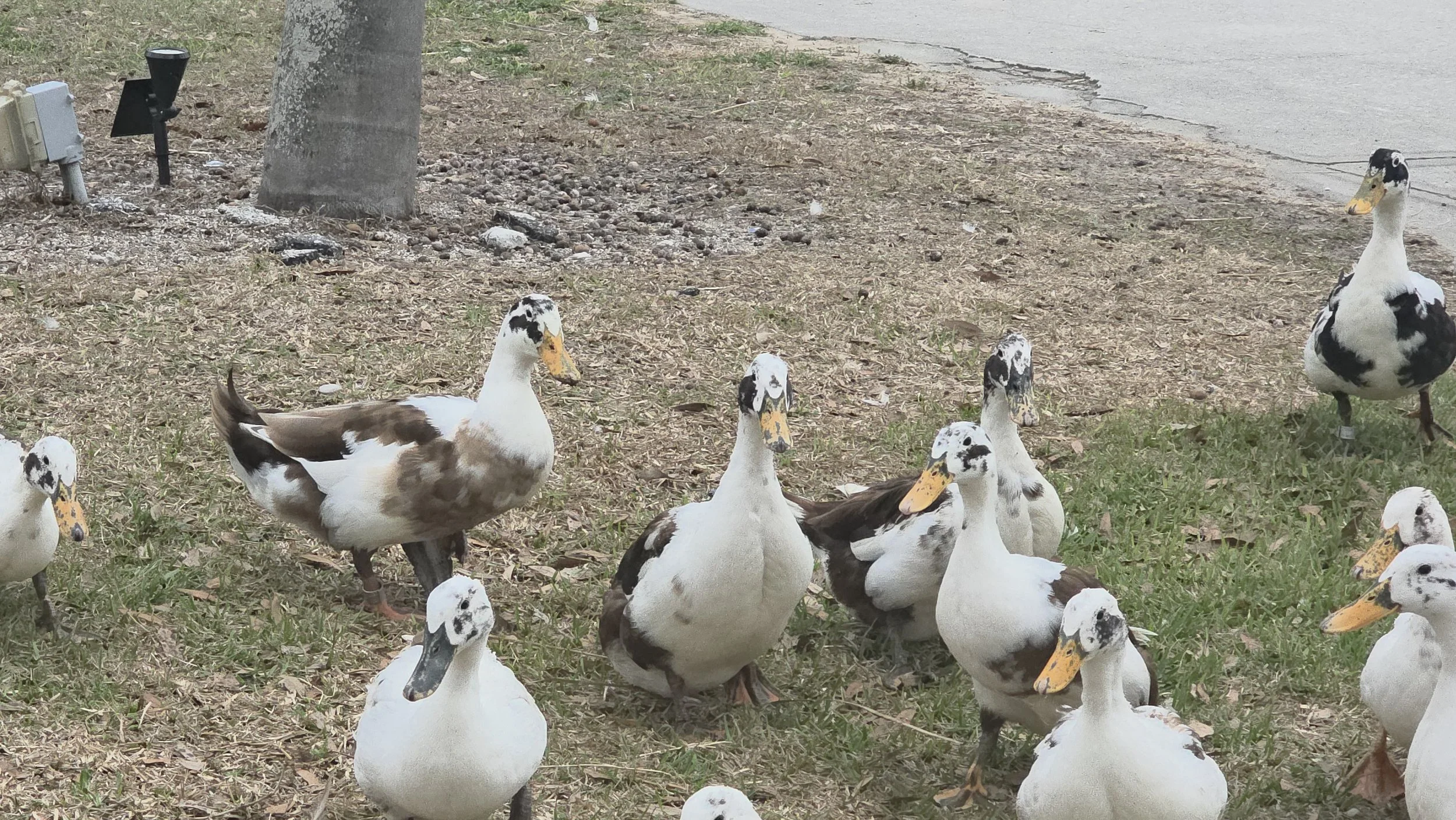
My entire flock of Anconas consist of all colors, except white and tricolor. Our current flock 2026 flock features two sires acquired from Holderead’s line, Chuck (black) and Pacco (chocolate). You will not hatch any unmarked or white ducklings, except for the silver color ones, whose markings are not visible until the ducklings are 2 or 3 weeks old. However, we do occasionally hatch crested ducks. The crested gene is linked to a lethal condition during incubation, even though we no longer keep any crested ducks in our breeding program. I am very proud of my flock of Anconas. My first Anconas hatched from several eggs I purchased from Allison Party (Al Qualquery) back when I first started with Anconas. A year later, I hatched eggs from Mantahala-farm (Nancy). With her line, I hatched a few heavily colored ones versus the lightly colored I got from Al Qualquerys, so there was quite a bit of work and culling I had to do to get what I have today. Ancona ducks are not yet APA recognized. I do support some of the proposed standards that is to steer away from heavily colored patterns. I have layers that put out white, cream, and blue-greenish eggs. Sometimes, I get some that is closer to the teal blue color. Please note, I do not separate my Anconas by color.
On November of 2025, we added two sire drakes from comendable Holderead’s line. We travelled over 1500 miles to and from South Carolina to pick up Chuck (black) and Paco (chocolate). They ared giviing beautiful babies.
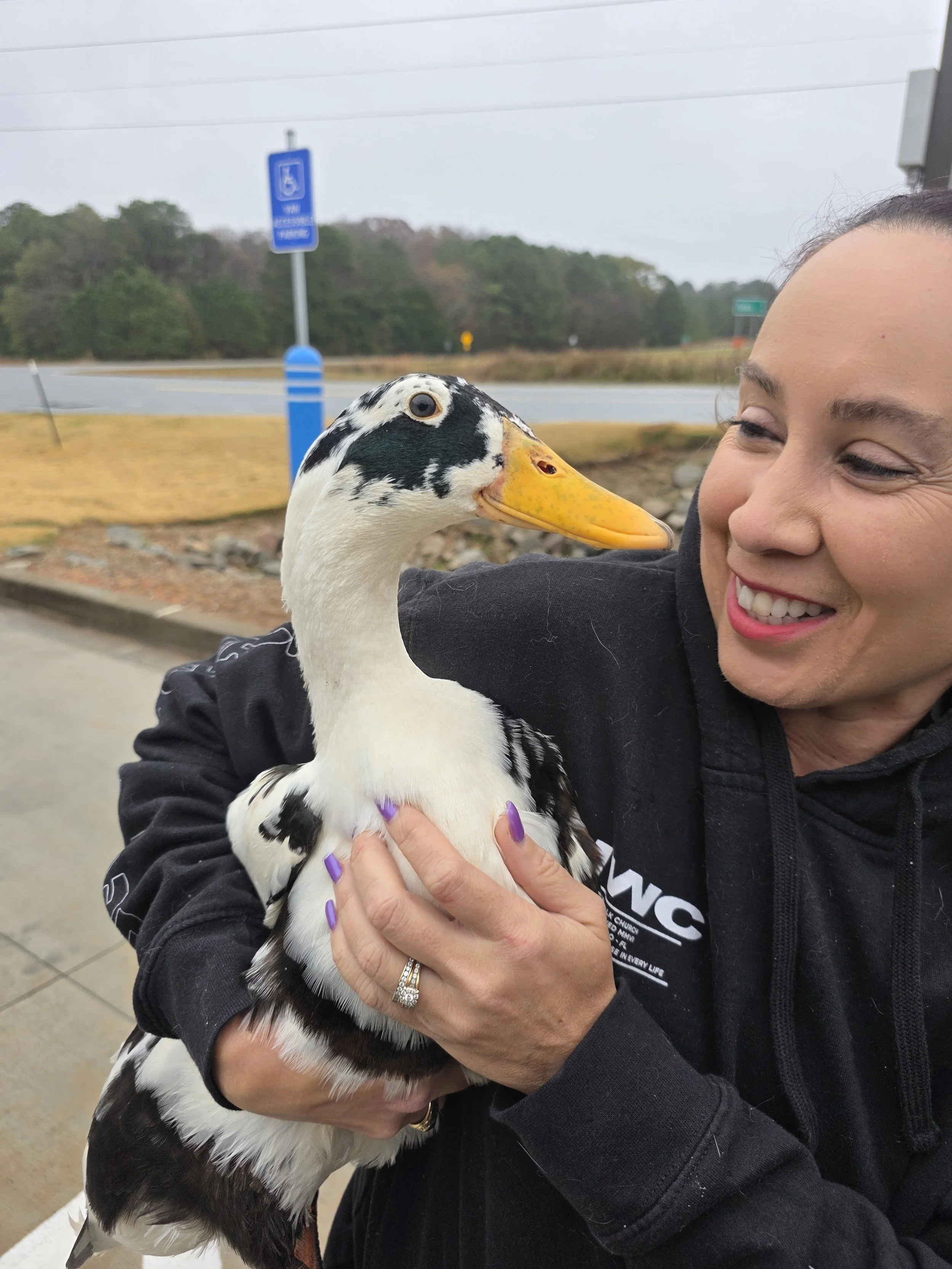
Ancona ducks are a delightful breed known for their unique appearance and friendly disposition. Originating in England, Ancona ducks are distinguished by their distinctive markings, which typically consist of a mixture of white and dark colors. The most common color patterns include black, blue, chocolate, and lilac, each with white splashes that give them a striking and attractive look.
Ancona ducks are rare heritage breed. We have been raising Anconas since 2018. From my personal experience, I can tell you they are a phenomenal breed. They are suer intelligent and friendly. The layers are prolific and fertile. They typically lay about 280 eggs a year. They are chatty but not loud. They love to forage and mate in the pond. Ancona’s current Livestock conservancy status is “Watch.” You can learn more in depth information about Ancona ducks here https://livestockconservancy.org/heritage-breeds/heritage-breeds-list/ancona-duck/
These ducks are medium-sized, with a robust body and a stout neck. They possess a calm and sociable temperament, making them great animals for both small farms and backyard settings. Ancona ducks are known for their foraging abilities and adaptability, thriving when allowed to roam freely in pastures or gardens.
In terms of productivity, Ancona ducks are good layers, producing around 150 to 200 eggs per year. Their eggs are medium to large in size and can come in a variety of colors, ranging from white to blue or green, adding visual interest to any egg collection.
Additionally, Ancona ducks exhibit hardiness and resilience, with a strong immune system making them less susceptible to common poultry diseases. Their unique and charming characteristics, combined with their adaptability and egg-laying capabilities, make Ancona ducks a valuable addition to any homestead focused on sustainable farming practices. We recommend that you verify zoning and other pertinent state requirements as Ancona is a protected species, at least here in Florida. We uphold a Game Farm License issued by FWC which allows us to raise, propagate, and sell Anconas. For most pet owners, all you really need is a pet license from FWC if you live in Florida and you just want them as pets.

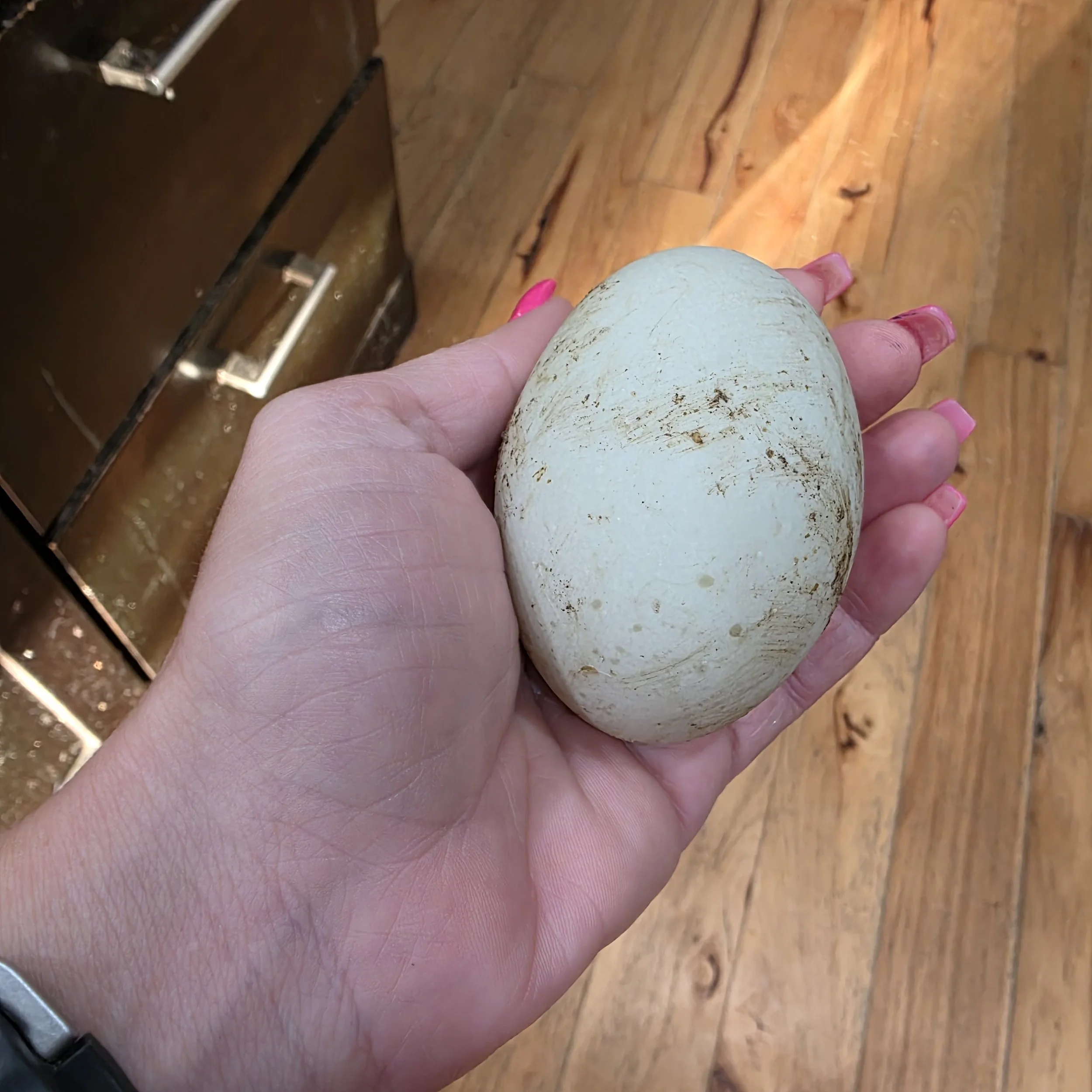
Please read the description in its entirety before ordering. We also recommend you read our policy on shipping and hatching eggs so you know how we process orders and what to expect after you place your order.
Price is per egg! You may only order up to 15 eggs per shipment. We work with small flocks and only ship fresh eggs. We are breeders who focus on quality over quantity.If you order more than 15 eggs, you order will be split into two shipments, most likely sent at different times. Minimum purchase of 6 eggs for shipping or local pick up. To place an order, select the quantity desired and add to the cart. Please select FREE local pick up option during check out if your order is being picked up locally. If you require shipping, please make sure you are selecting the right fulfillment. Any order under 15 eggs qualifies for shipping rate of $30; Any order above 15, your shipping is $40. We double box and we always try to include a few extras as extra insurance and courtesy., so it adds up quickly.
All orders of chicks and hatching eggs are pre-orders. You will receive a text or email from us when your order is ready for pick up or is being shipped. We only use FEDEX, 2nd day air service to ship our fertile eggs. If you prefer USPS over FEDEX, please let me know in the form you submit when placing your order. In that case, your order will be HELD FOR PICK UP at your local post office. Please note, I will not file any claims with USPS on your behalf. If you choose USPS priority service, you are taking all the risks from the moment we drop off your package at our post office. If you want your package to be held for pick up at your nearest FEDEX facility, please note the address and phone number of the facility you want your package to be delivered.